
Build a Talbot County Former-Owner Timeline
A backward timeline opens with the latest deed naming the current holder as grantee. Each row then lists that grantee's grantor, the instrument type, the recording date, and the book-and-page or instrument reference. Dates should climb backward in order. One row at a time, the ownership history of a Talbot County parcel takes shape. Treat the table that follows as a working model, not a record of any named property.
| Transfer point | Grantor to grantee | Instrument clue | Reference to retain |
|---|---|---|---|
| Newest recorded transfer | Seller to current grantee | Warranty, quitclaim, executor, or corrective deed | Recording date and book/page |
| Earlier acquisition | Previous seller to that grantor | Deed named in the newer instrument | Book/page and legal description |
| Subdivision origin | Developer or larger tract owner onward | Plat and lot/block reference | Plat book/page and lot |
| Pre-digital chain | Names in alphabetic indexes | Historic index and deed book | Volume, page, and index heading |
The Talbot Superior Court real-estate search page sends researchers to GSCCCA and KoFile. Record every spelling and reference before stepping back further. A date alone proves little. Two people can share a name. An old tract may have been split. The statewide GSCCCA search screen displays the record families available for this first pass.
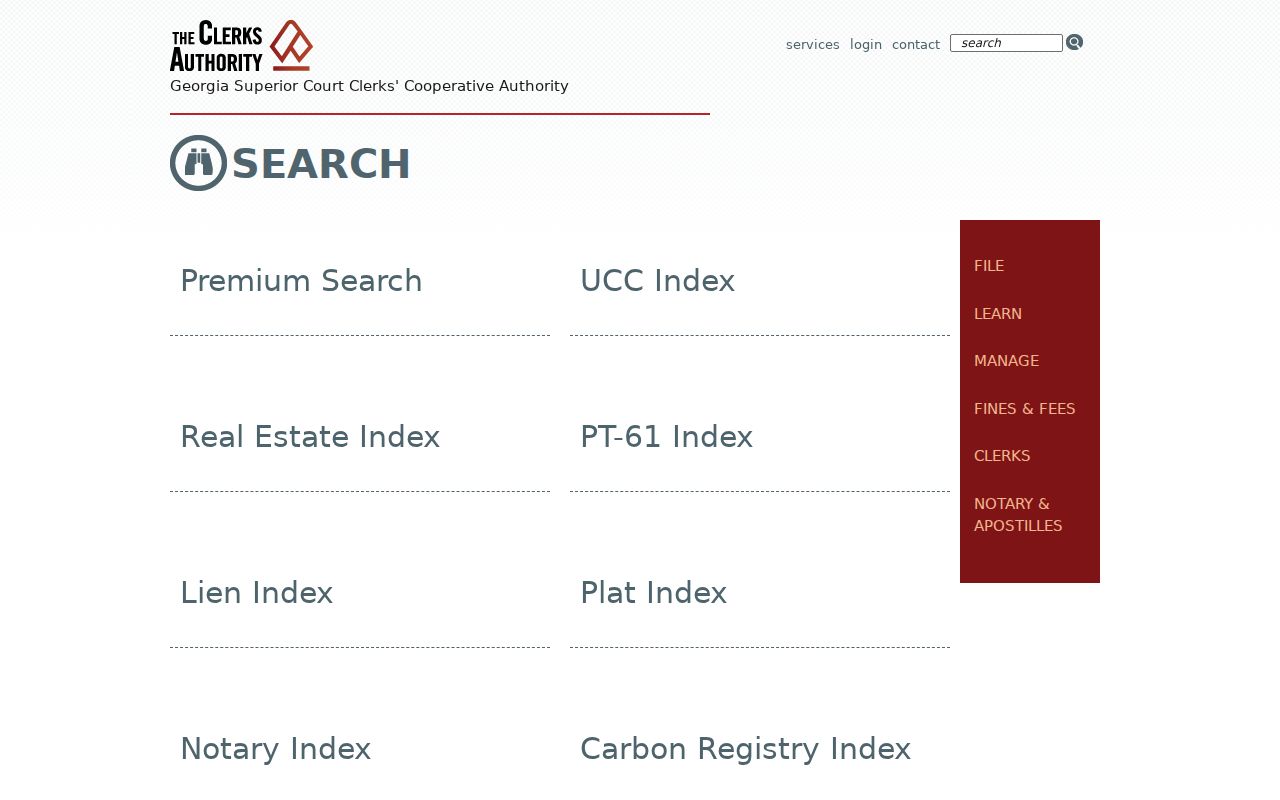
Those tabs are only starting points. The Talbot County chain still holds together only when every instrument matches the same tract.
Start Talbot County Ownership History With the Latest Grantee
Start with the newest recorded deed. It gives the cleanest route to previous owners of a Talbot County parcel. Search the current owner's name as grantee. Then compare the property description against the subject parcel. The deed's grantor becomes the next former owner to chase. A recent closing can lag behind the tax roll. The newest recording date often beats the owner display on a parcel card.
Keep the land constant. Match the legal description, acreage, lot and block, or prior book/page citation before treating a same-name deed as part of the chain.
Joint grantees, trusts, estates, and entities can change the name pattern without moving an inch of land. Copy every party exactly as indexed, initials and suffixes included.
Walk the Talbot County Deed Chain in Reverse
Former-owner research in Talbot County repeats one disciplined move. Take the buyer from one deed. Search that name as buyer on an older deed. Dates move backward while the legal description keeps pointing to the same tract, and each match adds another owner of record to the chain.
- Locate the most recent deed and read the grantee, grantor, recording date, and legal description.
- Search that grantor as an earlier grantee in the GSCCCA land-record search or the Clerk-linked KoFile route.
- Open the candidate entry and compare acreage, lot, plat, and prior deed references.
- Repeat with the next grantor until the online entries end, then carry the last reliable name and reference into older books.
- Grantor
- The party transferring an interest.
- Grantee
- The party receiving the interest.
- Chain of title
- The ordered sequence of instruments affecting the same land.
- Reverse index
- An index arranged to find transfers by the receiving party.
- Warranty and quitclaim deeds
- Different instruments whose legal effect should not be inferred from the index label alone.
The method rebuilds a record trail. It offers no legal opinion on whether every interest passed validly from owner to owner.
Fields That Keep Talbot County Prior Owners Connected
An index hit earns its keep only when it carries enough identifiers to separate one parcel and its parties from the rest. The Clerk's routes and historical materials keep the standard indexing clues alive.
| Index clue | Why it matters |
|---|---|
| Grantor and grantee | Connects one transfer to the next search. |
| Instrument or deed type | Flags an ordinary sale, corrective transfer, estate authority, or other change. |
| Instrument and recording dates | Separates execution from its place in the public record. |
| Book/page or instrument number | Points to the recorded image or Clerk copy. |
| Property or plat reference | Helps confirm the same tract despite a changed address. |
GSCCCA offers search routes by name, book and page, property, instrument type, PT-61, lien, and plat, though some modes are premium and Talbot County availability varies by mode. Start with name and book-and-page searches for a deed chain.
Note: Treat an index result as a locator and verify the recorded instrument before adding a person to the ownership timeline.
Talbot's Alphabet-Split Virtual Vault
The Talbot Clerk Virtual Vault displays an unusual catalog. Its groups split by alphabet: Grantees A-K, Grantors A-K, Grantors L-Z, Grantee P-Z, Grantor A-F, and Grantor G-O. Lettered deed books A, B, C, E, G, and J sit alongside them. The lettering opens a path into older former owners. No volume carries a year range on the page.
The Vault itself warns that historical scans may be incomplete, hard to read, and informational rather than certified. So treat a visible name or page as a lead worth noting. Verify it with the Clerk at 26 S. Washington Avenue in Talbotton, or call 706-665-3239.
The Clerk's Virtual Vault collection screen makes the alphabet groups and lettered deed books visible.
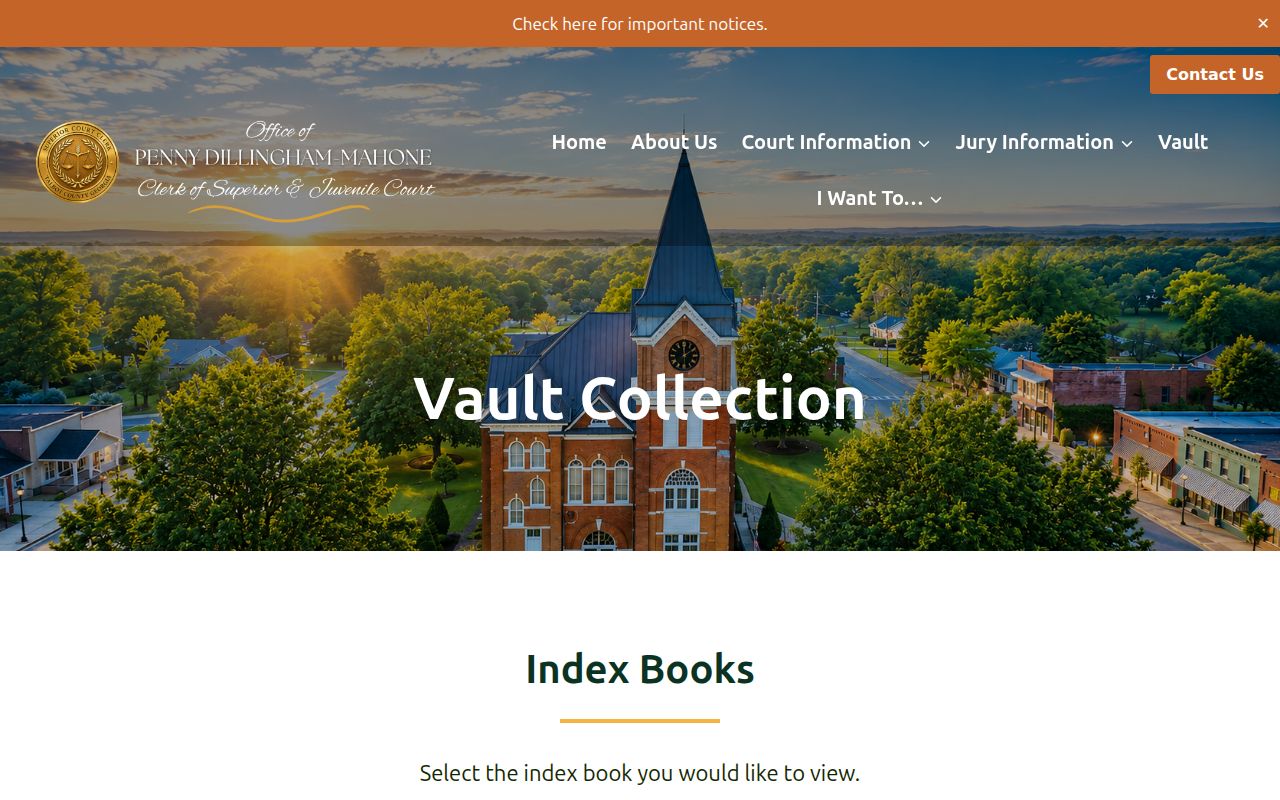
That screen confirms which categories exist. It gives no year spans, so note the volume and ask the Clerk for date guidance.
How Deep Talbot County Previous-Owner Records Reach
GSCCCA reports a statewide milestone: its deed database became operational on January 1, 1999. Every Georgia county has online indexes. That date does not guarantee Talbot County images or indexes reach back to 1999. The Clerk publishes no earliest year for Talbot-specific online deed records.
Where the online chain stops, take the last confirmed party to the Clerk. Bring the legal description and the book-and-page reference too. Ask for the older index or deed book. No official Talbot page lists a public terminal, a complete microfilm run, or copy fees. Request whatever fits the job. Options include inspection, an emailed scan, a noncertified copy, or a certified copy. Ask the current cost before ordering anything.
Online cutoff. Do not assume 1999 is Talbot County's first deed year. Older owners may require Virtual Vault volumes, physical deed books, or archive help.
Estate Transfers Can Bend a Talbot County Owner Chain
Death bends a clean sale-to-sale chain. When a Talbot County owner died, authority over the land moved through probate. Petitions, inventories, annual returns, and orders fill the gap. An administrator or executor deed may be the next recorded instrument. Talbot Probate Court sits at 26 S. Washington Avenue. Its case records are not online.
The FamilySearch catalog of Talbot annual returns spans 1828 through 1926 across six reels of courthouse records. Those returns give estate context when a deed index jumps from a deceased owner straight to heirs or an administrator. Treat them as supporting evidence. The recorded deed and probate order still govern what happened to the land.
Note: Search estate names, heirs, administrators, and executors when the next grantor never appeared as a conventional buyer in the deed index.
Plats Anchor Talbot County Past Owners to the Same Ground
Old roads and postal wording drift over time. The tract beneath them stays the same. A recorded plat, lot and block, acreage, or metes-and-bounds description is the better bridge across the decades. The GSCCCA Plat Index adds name and book/page routes. Talbot County's GIS schema exposes legal-description, acreage, map, grid, parcel, and account fields, which helps when tying a past owner to the same ground.
Treat the parcel map as a reference only. A polygon can point to the likely tract. It cannot replace the recorded plat or a boundary survey. Rail corridors named in the county plan, including CSX and Norfolk Southern lines, make recorded easements and rights-of-way worth checking whenever a historic description follows a transportation edge.
Talbotton Newspapers Preserve Sale and Estate Clues
Talbotton papers fill narrative gaps between instruments. The Digital Library of Georgia county newspaper index offers searchable or browsable issue access. The Georgia Newspaper Project adds microfilm holdings. Sheriff-sale advertisements, estate notices, and printed legal descriptions can surface a former owner's name or the context of a sale.
Carry any description back to the deed books. A newspaper notice is context, not the transfer itself. This two-source method catches spelling variants and estate sales that hide in an alphabetic index.
Request a Missing Talbot County Ownership Record
Sometimes neither the statewide index nor Virtual Vault resolves the chain. Ask the record keeper instead. The Georgia Open Records Act lets you request inspection or an electronic copy. Be precise. Name the parcel, party, book/page, instrument, and date range. The custodian must respond within three business days with records or with timing, cost, and any exemption basis.
Staff will not build an owner history for you. The Act covers existing records only. Request the deed index page, a named volume, a plat, or an existing probate file rather than "all former owners." Search and retrieval charges may apply at the lowest qualified employee's rate, with the first 15 minutes free and ordinary paper copies generally capped at $0.25 per page.
Limits on Talbot County Former-Owner Research
Any historical chain has blind spots. Unrecorded interests, releases, corrective instruments, probate authority, liens, easements, and tax-sale redemption events can all slip past the deed index. The Talbot County deed records guide explains how to obtain a specific instrument. A former-owner trail serves house history, estate research, and boundary diligence. It also helps with preparation for a professional title review. It is not proof of marketable title.
Names come with a duty. Public records must not be used to harass, surveil, intimidate, or target a living person. Keep the search on the parcel and its record purpose. Need a current certified instrument? Contact the Clerk or an appropriate professional.